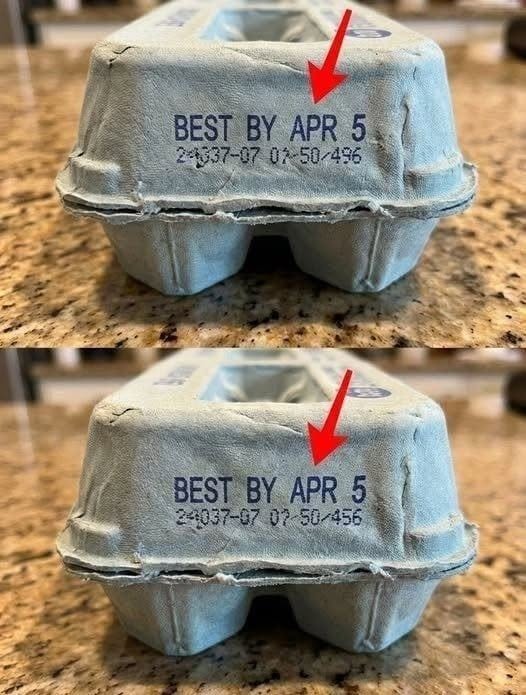
We’ve all experienced it: you crack an egg and, before you even see it, a terrible smell hits your nose. Instead of playing the risky game of “Is this egg still good?”, there’s a better way to check freshness—by understanding the mysterious codes printed on egg cartons.
Eggs are a kitchen staple and a powerful source of protein. Whether you enjoy them scrambled, fried, poached, or baked into cakes and pastries, eggs appear in countless recipes.
But have you ever noticed the extra numbers printed on the carton besides the expiration date? These codes can tell you more about your eggs than you might think.
Let’s break down what they mean so you can always choose the freshest eggs possible.
The Julian Date: The Key to Egg Freshness
If you look closely at your egg carton, you’ll often find a three-digit number printed near the sell-by date. This number is called the Julian date.
The Julian date tells you the exact day the eggs were packaged.
The numbering system is simple:
For example:
-
If the code reads 045, the eggs were packaged on February 14.
This system helps consumers quickly determine how fresh the eggs are before buying them.
The Plant Code
Near the Julian date, you may also see a code starting with “P” followed by four numbers.
This is known as the plant code.
The plant code identifies the facility where the eggs were processed and packaged.
This code becomes especially important if there is a food safety recall. Consumers can check the plant code to determine whether their eggs were processed at the affected facility.
Why These Codes Matter
For Complete Cooking STEPS Please Head On Over To Next Page Or Open button (>)