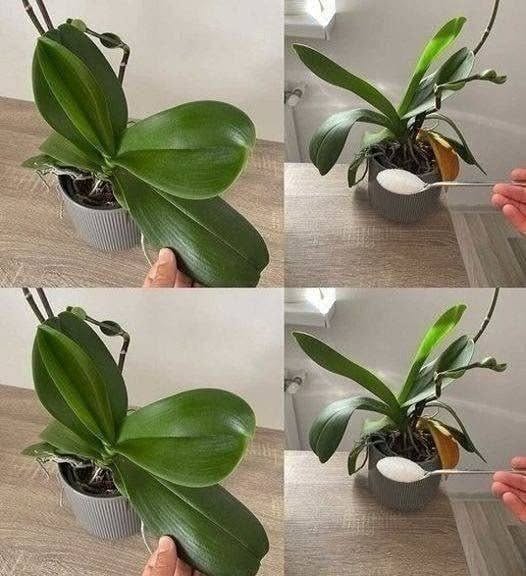
Many online articles promise nonstop flowering throughout the entire year.
While some orchid varieties bloom multiple times annually, continuous flowering is not typical for most species.
Orchids naturally cycle through periods of:
- Growth
- Root development
- Flower spike formation
- Blooming
- Rest and recovery
These cycles are normal and help maintain long-term plant health.
Additional Tips for Thriving Orchids
Provide Proper Light
Most orchids prefer bright but indirect sunlight. Direct afternoon sun may damage leaves.
Avoid Overwatering
Root rot remains one of the leading causes of orchid failure.
Allow the growing medium to approach dryness before watering again.
Maintain Humidity
Many orchid species enjoy moderate humidity levels, especially during active growth.
Repot When Necessary
Growing media break down over time and may hold too much moisture.
Repotting every few years helps maintain healthy root conditions.
The Real Secret to Beautiful Orchids
There is no miracle spoonful capable of forcing orchids to bloom endlessly.
The real secret is balance.
Healthy roots, proper light, careful watering, good airflow, and moderate fertilization work together to create the conditions orchids need to thrive.
Final Thoughts
Orchids reward patience more than shortcuts.
By providing a modest amount of nutrients and maintaining consistent care, you can encourage stronger growth, healthier roots, and impressive flowering displays throughout the year.
Sometimes the most effective orchid care strategy is not giving more—but giving exactly what the plant needs.
For Complete Cooking STEPS Please Head On Over To Next Page Or Open button (>)